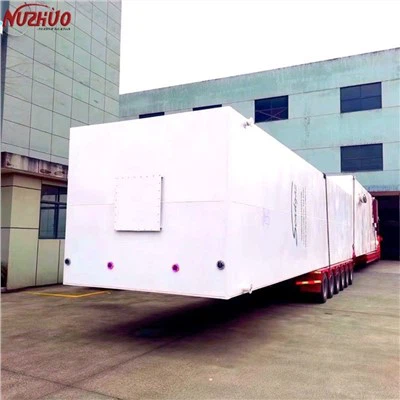
Pressure swing adsorption oxygen production, with zeolite molecular sieve adsorbent as the core, selects to adsorb nitrogen gas at a higher pressure based on the adsorbent. Unadsorbed oxygen accumulates at the top of the adsorption tower as product gas output. When the adsorption tower is close to saturation, the raw air stops entering, and then equalizes pressure to the other adsorption tower that has completed regeneration, followed by pressure relief regeneration. The pressure equalized adsorption tower introduces raw air to begin adsorption. The two adsorption towers are repeated alternately to complete the process of oxygen production. The industrial pressure swing adsorption oxygen generator can adopt a pressurized adsorption and atmospheric pressure desorption process; Ultra high pressure vacuum desorption process; Penetration atmospheric pressure vacuum desorption process. The principle and process of a nitrogen generator (2 adsorption towers - A/B): The PSA nitrogen production adsorbent uses CMS, which utilizes the difference in the adsorption amount of oxygen and nitrogen on the CMS surface, that is, the diffusion rate of oxygen is much faster than that of nitrogen, adsorbing O2 and desorbing N2. By controlling the start and close of the programmable valve through a PLC programmable controller, each adsorption and desorption cycle process is achieved, including pressurized adsorption and depressurization desorption, to complete the separation of oxygen and nitrogen, and obtain the required purity of nitrogen. 3、 Process flow description purification: The air is pressurized by a screw compressor, and dust and some residual oil in the air are removed through a primary filter. After being dehydrated by a cold dryer, the dew point of the air is reduced to -23 ℃ under normal pressure. At this point, most of the water has been removed. Then, through the second and third stage filters, the necessary conditions for the long-term stable operation of the adsorption device are achieved: residual oil content ≤ 0.003ppm, dust diameter ≤ 0.01 μ M. Adsorption regeneration: The purified air enters the air buffer tank, which is mainly used to ensure the balance of pressure in the nitrogen production system. The purified air from the air buffer tank enters Tower A from the bottom of the adsorption tower, where Tower A adsorbs, CMS adsorbs O2, and N2 enters the N2 product buffer tank from the top of the tower. After running for a period of time, the molecular sieve in Tower A is saturated with O2, but the adsorption front of oxygen has not yet reached the outlet of Tower A for regeneration. The PLC automatically closes the inlet valve of Tower A, and at the same time, Tower A raises the pressure of Tower B, which has just completed flushing. It itself is a pressure equalization degradation adsorption. Next, the product gas is used to increase the final pressure of Tower B to reach the adsorption pressure. Tower A releases and desorbs the O2 from the bottom of the tower and releases it to the atmosphere. Tower B begins to adsorb, Flush Tower A. Two adsorption towers alternate for adsorption and regeneration to ensure continuous product output. Each tower undergoes the following steps: adsorption, depressurization desorption, reverse release, flushing, boosting, and final pressure rise, completing a cycle within 1-2 minutes. In order to obtain continuous and stable product nitrogen, a product nitrogen buffer tank has been configured. Nitrogen output: After passing through the buffer tank, the nitrogen is regulated by the pressure regulating valve to regulate the output pressure, and the regulating valve is combined with the flow meter to regulate the output flow. When the nitrogen purity is greater than or equal to the set value, the nitrogen analyzer sends a signal, which is adjusted through the valve, and the nitrogen is input to the gas consumption point. When the purity of nitrogen is less than the set value, it is automatically discharged through valve adjustment. The automatic operation of the PSA nitrogen generator is automatically controlled by PLC and a two position five way solenoid valve. Install a safety valve on the air buffer tank, with the opening and closing pressure of the safety valve being 1.05-1.15 times the normal working pressure