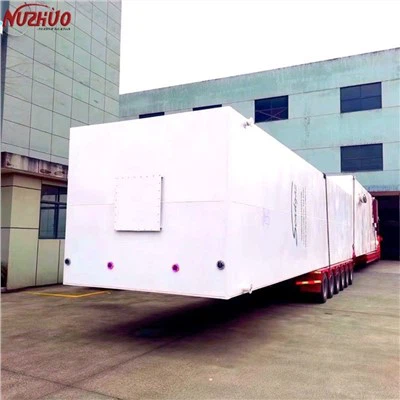
NUZHUO oxygen generator plant medical industrial use over 99.5% purity, cryogenic air separation medical oxygen. Cryogenic Medical Oxygen Manufacturing Plant. Oxygen Generator Plant Price for medical 99% Oxygen Medical Oxygen Generating System, NZDO-100 Air Separation Plant Gas Generation Equipment Cryogenic Automatic Medical Oxygen Mini Plant.
What is Cryogenic Oxygen Plant?
A Cryogenic Oxygen Plant is an industrial facility that creates molecular oxygen, molecular nitrogen, argon, krypton, helium, and xenon at relatively high purity. As air is made up of nitrogen, the most common gas in the atmosphere, at 78%, with oxygen at 19%, and argon at 1%.
Why Choose Us
Quality
Quality14,000 square meters of modern standard workshops, advanced testing equipment,the process characteristics of argon arc welding ISO quality inspection, CE certification, TUV inspection and SGS inspection.
Technology
TechnologyPressure swing adsorption, Vacuum pressure swing adsorption, Membrane separation, Plate pressing,Cryogenic Separation,CAD Drawing, Compression expansion.
Market
Our domestic market and foreign market share halfway through: Morocco, Algeria, Mexico, Russia, and etc.
Customer Service
We prioritize open communication to address our clients' specific requirements and deliver personalized solutions.
-
![Purity 99.6% Cryogenic Oxygen Plants]() Purity 99.6% Cryogenic Oxygen PlantsShort specification 1.Air Compressor: Air is compressed at a low pressure of 5-7 bar (0.5-0.7mpa) 2.Pre Cooling System: Cooling the temperature of air to around 12 deg C. 3.Purification of Air By Purifier: Twin molecular Sieve...view more
Purity 99.6% Cryogenic Oxygen PlantsShort specification 1.Air Compressor: Air is compressed at a low pressure of 5-7 bar (0.5-0.7mpa) 2.Pre Cooling System: Cooling the temperature of air to around 12 deg C. 3.Purification of Air By Purifier: Twin molecular Sieve...view more -
![High Purity 99.6% Liquid Oxygen Metallurgical Plant]() High Purity 99.6% Liquid Oxygen Metallurgical PlantWe are the leading manufacturer in the field of air separation.view more
High Purity 99.6% Liquid Oxygen Metallurgical PlantWe are the leading manufacturer in the field of air separation.view more
Our advantages:
1. Our liquid oxygen metallurgy plant offers full customization.
2. Our liquid oxygen metallurgy plant operates reliably and has low energy... -
![Oxygen Factory]() Oxygen Factory1、This oxygen factory has strong system inertia and anti-interference capabilities.view more
Oxygen Factory1、This oxygen factory has strong system inertia and anti-interference capabilities.view more
2、Due to the fact that the interior of this oxygen factory is filled with a large amount of cryogenic liquid and huge metal equipment, the entire... -
![Liquid Oxygen Systems Equipment]() Liquid Oxygen Systems EquipmentThis liquid oxygen systems equipment has the ability to achieve the lowest unit consumption cost on an extremely large scale.view more
Liquid Oxygen Systems EquipmentThis liquid oxygen systems equipment has the ability to achieve the lowest unit consumption cost on an extremely large scale.view more
For large-scale continuous gas production, the unit energy consumption of cryogenic air separation is the... -
![Machine For Produce Oxygen]() Machine For Produce Oxygen1、This machine for produce oxygen features extreme purity and flexibility.view more
Machine For Produce Oxygen1、This machine for produce oxygen features extreme purity and flexibility.view more
2、It can stably produce industrial oxygen with a purity ranging from 95% to high-purity oxygen of over 99.6%
3、The purity and output can be precisely and... -
![99% Purity Oxygen Station]() 99% Purity Oxygen Station1、The anti-surge control of the oxygen turbine and the liquid oxygen pump of this 99% purity oxygen station is coordinated.view more
99% Purity Oxygen Station1、The anti-surge control of the oxygen turbine and the liquid oxygen pump of this 99% purity oxygen station is coordinated.view more
2、When the external compression process (using an oxygen compressor) is adopted, the anti-surge control... -
![Cryogenic Technology Oxygen Plant]() Cryogenic Technology Oxygen Plant1、This cryogenic technology oxygen plant is equipped with a nitrogen circulation refrigeration process. In some special processes, nitrogen itself is used as the circulating working medium.view more
Cryogenic Technology Oxygen Plant1、This cryogenic technology oxygen plant is equipped with a nitrogen circulation refrigeration process. In some special processes, nitrogen itself is used as the circulating working medium.view more
2、The main cooling capacity required by... -
![Oxygen Separation Plant]() Oxygen Separation Plant1、The distributed control system of this oxygen separation plant is responsible for the regular monitoring and regulation throughout the entire process.view more
Oxygen Separation Plant1、The distributed control system of this oxygen separation plant is responsible for the regular monitoring and regulation throughout the entire process.view more
2、The safety instrument system is independently set up to perform safety... -
![Cryogenic Oxygen Production Line]() Cryogenic Oxygen Production Line1、When operating the cryogenic oxygen production line, pay attention to monitoring vibration and bearing temperature: these are key indicators for the healthy operation of the expander.view more
Cryogenic Oxygen Production Line1、When operating the cryogenic oxygen production line, pay attention to monitoring vibration and bearing temperature: these are key indicators for the healthy operation of the expander.view more
2、When operating the cryogenic oxygen... -
![LOX Plant]()
-
![Air Separation System]() Air Separation System1、This air Separation System needs to be switched and calibrated regularly.view more
Air Separation System1、This air Separation System needs to be switched and calibrated regularly.view more
2、Regularly switch and operate spare components such as water pumps, oil pumps, expanders, molecular sieves, etc., to ensure they are in good... -
![Cryogenic Oxygen Manufacturing Plant]() Cryogenic Oxygen Manufacturing Plant1、This device is confronted with the safety challenge of hydrocarbon accumulation in liquid oxygen.view more
Cryogenic Oxygen Manufacturing Plant1、This device is confronted with the safety challenge of hydrocarbon accumulation in liquid oxygen.view more
2、Liquid oxygen in the main condensing evaporator is a key focus of safety monitoring. It is necessary to continuously monitor the...


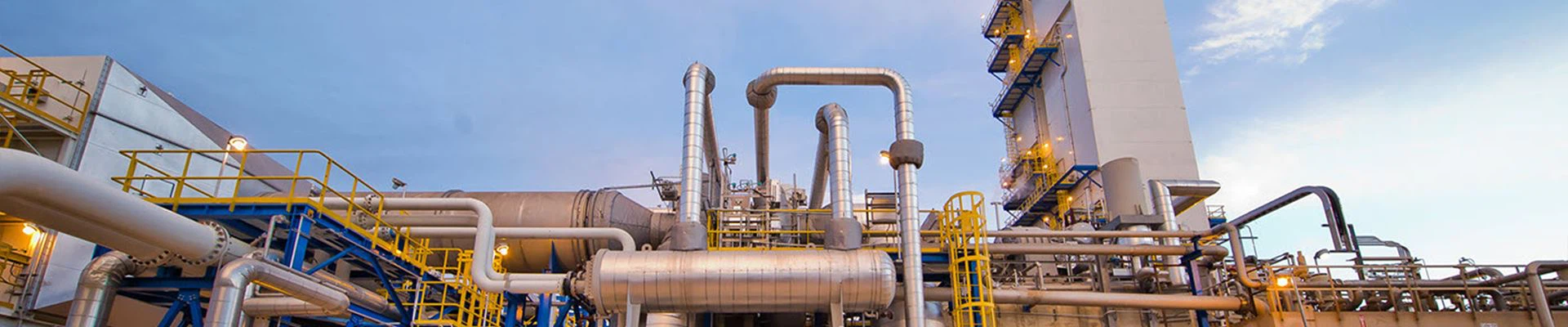
In physics, cryogenics is the production and behavior of materials at very low temperatures. In other words “Cryogenic” means producing or related to low temperatures and all cryogenic liquids are extremely cold. Cryogenic distillation is the process in which nitrogen and oxygen are separated from air. Cryo oxygen gas plant is used for producing oxygen for industrial and medical applications. How does cryogenic distillation work for oxygen nitrogen. Cryogenic distillation technology is used in the manufacturing and fabricating of plant machinery.
For getting high quality liquid oxygen, you must use liquid oxygen plant that takes oxygen from the atmospheric oxygen which is then cooled until it gets liquefied. After this stage, oxygen is distilled at its boiling point of -183 degree Celsius.
For ensuring smooth working of cryogenic oxygen machinery, it is imperative for tight integration of heat exchangers and air separation columns for maintaining efficiency. Energy for cooling oxygen to cryogenic temperature is obtained by the compression of the air.
In order to get low distillation temperatures cryogenic oxygen plant needs a refrigeration cycle and cold equipment that must be placed within a insulated closure which is commonly known as cold box. However, for getting energy to run refrigeration cycle the latest liquid oxygen plant use expansion turbines.
When the air is compressed, it is passed through a cleanup system where vapor, carbon dioxide and hydrocarbons are eliminated. Afterwards, the compressed air is passed into high pressure distillation column where vaporous oxygen is formed at the top of the column and nitrogen is formed at the bottom of the column.
Applications of Cryogenic Oxygen Plant In Industries
Cryogenic oxygen plant has got numerous applications in various industries including steel, chemical, medical, petroleum, pharmaceutical, food, non-ferrous. Some of the important applications are described below:
Combustion:Oxygen is used for increasing the combustion of fuels including oil, gas, coal, and biomass in power plants, furnaces, kilns, engines and boilers. As a result, the efficiency, output, and environmental performance of the combustion process improve considerably.
Oxidation
Oxygen is used for oxidizing or converting organic or inorganic substances like hydrogen, sulfur, ammonia, carbon monoxide and ethylene into useful products such as hydrogen peroxide, sulfuric acid, nitric acid, carbon dioxide and ethylene dioxide. And, you can find this in chemical reactors, catalytic converters, and gasifiers.
Gasification
Amongst its many applications, we see that oxygen is used for gasifying biomass, coal or waste into a synthetic gas, which is used as a fuel or feedback for chemicals. This is done in gasifiers where oxygen is made to react with carbonaceous material at high temperatures and pressures.
Oxy-fuel cutting & welding
Another important application of oxygen is oxy-fuel cutting and welding where it is used to cut and weld metals like iron, steel, aluminium and copper. This is done by creating a high-temperature flame with a fuel gas, such as acetylene, propane, or hydrogen. It finds applications in torches, plasma cutters, and burners.
Medical
As you might be aware oxygen is used extensively in the medical industry. It is used to treat patients suffering from low oxygen levels such as those with cardiac diseases, respiratory diseases, trauma, or poisoning. Also, it is used to provide life support in artificial ventilation, anesthesia, hyperbaric chambers, and extracorporeal membrane oxygenation (ECMO).
Biomedical
As for use of oxygen in biomedical industry, it is used for culturing cells, tissues, and organs in bioreactors, bioprinters, and biobanks. Besides, it is also used for sterilizing sterilize medical devices, equipment, and implants by using ozone or plasma.
Food & beverages
In the food and beverage sector, use of oxygen include preservation and enhancement of the quality , flavor, color, texture and shelf life of food and beverage products including fruits, fish, vegetables, meat, juice, beer and wine. Moreover, it is also used for aerating and carbonating drinking including soda, water, and sparkling wine.
What is cryogenic processing and how can it be used in the gas industry? Cryogenics is the creation and function of materials at extremely low temperatures in physics. In other words, "cryogenic" means any substance that produces or is connected with cryogenic temperatures, and all cryogenic oxygen plants are extremely cold. Why cryogenic equipment is used in oxygen production plants? It's perfect for increasing production of oxygen. In manufacturing and fabricating, high-quality materials that fulfill The American Society of Mechanical Engineers (ASME) requirements are employed.
It is critical for the high efficiency of cryogenic oxygen plant machinery to have close coordination of heat exchangers and air separation towers. Compression of the air supplies the fuel required to freeze oxygen to cryogenic temperatures. A cryogenic oxygen plant requires a cooling system and cold equipment that must be placed in an insulated enclosure known as a cold box in order to reduce the total distillation temperature.
The modern liquid oxygen plants, but on the other hand, utilize expansion turbines to create power for the refrigeration cycle. When air is forced, vapour, carbon dioxide and hydrocarbons are utilized to remove it through a purification system. Following that, the compressed air is blown through a high-pressure distillation column, where vaporous oxygen forms there at top and nitrogen produces at the base.

There are many techniques for generating oxygen for meeting the requirements of industrial and medical applications. The most common techniques being cryogenic distillation, pressure swing adsorption and membrane separation.
Pricing of Cryogenic and PSA technology is different
Customers new to the oxygen industry do not understand the difference between cryogenic based oxygen plants and PSA oxygen plants. Mostly, they are of the view that all O2/N2 gas plants are priced like PSA plants which is not true. pressure swing adsorption plant cost does not match with the cryogenic based plants since both the technologies are completely different.
Pressure swing adsorption technology is suitable for businesses requiring oxygen with lower volume and lower level of purity. PSA process runs on simple process of adsorption where adsorbing material such as Zeolite molecular sieves is used with one gas being adsorbed more than the other. When air is passed nitrogen is adsorbed while oxygen is allowed to pass through.
As PSA pressure swing adsorption process is employs simpler technology costs less to manufacture PSA plant price is way less than cryogenic based plants. Cryogenic technology is sophisticated and requires use of elaborate process with components that are way more costly than those used in PSA process.
Oxygen Purity with PSA Vs. Cryogenic Process
As mentioned earlier, PSA is ideal for generating oxygen with lower purity and volume as compared to cryogenic air separation which is used for generating oxygen with the highest possible purity and larger volume.
Tonnage cryogenic plants can produce oxygen on a huge scale with very high purity which is not possible with PSA plants. PSA plants are rarely available with configuration of 200m3/hr not to talk of tonnage plants.
Cryogenic plants can generate both oxygen and nitrogen
PSA plant can generate only one product gas either nitrogen or oxygen. On the other hand, a cryogenic plant can produce both oxygen and nitrogen. If you have an oxygen plant it can also produce nitrogen. However, it would require you to buy a nitrogen cylinder filling system.
Cryogenic process can generate oxygen in liquid and gaseous forms
Cryogenic oxygen plant can generate oxygen in both liquid and gaseous forms. And, psa oxygen generator plant can only produce either oxygen or nitrogen in the gaseous form only.
Different life-cycles
Both cryogenic and PSA plants have got different life-cycles. Where PSA is known to have life cycle of over 10 years cryogenic plants have life cycles of over 25 years. This becomes possible because the cryogenic O2/N2 plants are fabricated with cryogenic grade stainless steel which is capable of withstanding extreme temperature and pressure. Cryogenic air separation units are welded with TIG argon welding.
Applications of PSA oxygen plants
PSA plants are best suited for small industries requiring oxygen with lower volume and where oxygen with lower purity is also acceptable. The plants are best suited for following industries:
Welding /cutting/heating
The plants are ideal for onsite generation of oxygen for use in welding and cutting. In this industry oxygen is used along with acetylene where purity is not an issue.
Blowing of glass and beads
It can also be used in glassware industry for blowing glass and beads. It is a cottage industry where oxygen is needed for making various types of glassware products.
Fish farming
It is another application where small psa plants are used for oxygenating pond water to improve oxygen content in the water which is essential for improving health of fish.
Nitrogen and Oxygen Production
Oxygen and nitrogen represent main parts of the air. All N2 and O2 which are commercially available are produced form of the air. Nitrogen is colourless, odourless and tasteless gas.
Atoms of the nitrogen have very strong bond which makes nitrogen very stable so it has no need to enter in chemical reactions. Due to these properties, the nitrogen is used in food industry, steel processing, electronics and similar applications.
Oxygen is also without colour, odour and taste. Compared to nitrogen the oxygen reacts with most of the chemical elements.
It is necessary for most living organisms for metabolic processes. It also accelerates fire, which is useful for steel and glass industry.
Membranes are suitable for lower quantities and purity. Advantage is temperature. The higher the temperature is, the higher the efficiency is. This is opposite to other production concepts.
With pressure swing adsorption (PSA) is possible to reach high purity (97 to 99,999 % of the nitrogen) and relative high production capacities. It is possible to reach even higher purity, but consumption of the compressed air is higher. The lower the purity is, the lower the nitrogen production costs are.
Cryogenic plant is the oldest concept. Pure gases can be separated from air by cooling it until it liquefies. Then components are separated based on various boiling temperatures. This concept produces high purity and high capacity gases but it is capital and energy-intensive. Cryogenic plants are typical located at the source of the consumption. Surplus of the produced gases is distributed as a liquid nitrogen or this liquid nitrogen is evaporated and compressed in high pressure cylinders.
Compared to nitrogen there are no membranes for direct oxygen production on the market, so possible ways of the production are only PSA concept and cryogenic plant. Next to PSA we can see VPSA. V stands for vacuum. This concept differs form PSA only by operating pressure (PSA from 6 to 10 bars, VPSA about 0,5 bar). VPSA is typically used for high capacities. With PSA and VPSA it is possible to reach maximum purity 95%. Other gases are more or less noble gasses as Ar, He, etc.
With cryogenic plants, it is possible to reach higher purity, because separation is made based on different boiling points of the gases. The same as nitrogen, oxygen produced in cryogenic plants is distributed to the end costumers as a liquid or compressed oxygen.
How the pressure swing adsorption generator works?
The purified air is directed to one of two adsorption vessels that are packed with carbon molecular sieve (CMS). The impurities such as carbon dioxide and residual moisture are adsorbed by the CMS at the entrance of the adsorbent bed. When the CMS is under high pressure, it selectively adsorbs oxygen, allowing nitrogen to pass through it at the desired purity level. While one vessel is under high pressure to produce nitrogen, the second vessel is depressurized to remove the adsorbed oxygen, which is then vented into the atmosphere.
Automatic switching between adsorption and desorption enables the continuous production of nitrogen. By adjusting the size of the air compressor and adsorption vessels containing the CMS it is possible to reach large range of flow and purity combinations.
Generators operates in short cycles. In one year, they can reach more than 300.000 cycles. This means that all the components of the generators must be high quality. This is especially important for valves. To achieve desired purity, it is necessary to control pressure and flow of the compressed air and also nitrogen. For correct operation, software is also important.
Nuzhuo Technology Group Co., Ltd., whose factory is located in Tonglu County, Hangzhou City, Zhejiang Province, China, is a manufacturer of PSA oxygen generators, VPSA oxygen generators, low temperature air separation plants, oil-free O2/N2 booster equipment and other related products. The factory covers an area of 14,000 square meters, has advanced plant facilities, and has passed a number of national patent certificates. All products of the company have passed CE certification, BV certification, ISO9001 quality management system, and support pre-loading inspection. Effectively control the quality while fighting against the rising labor costs around the world, shorten the delivery time under the premise of meeting customer specifications, and achieve the best economic production capacity.
FAQ
We're well-known as one of the leading cryogenic oxygen plant manufacturers in China, specialized in providing high quality customized products. If you're going to buy high-grade cryogenic oxygen plant with competitive price, welcome to get quotation from our factory.
Air Separation Unit ASU, Cryogenic Oxygen Generation Plant, Industrial And Medical Liquid Oxygen Plant